
Hurricane Katrina devastated entire neighborhoods, and the city's relocation policy met widespread resistance as residents fought to salvage their homes. Marshes and wetlands that had been drained to accommodate housing now presented a serious threat: with land sinking and water levels rising, the city faced a structural ecological crisis.
The central question: Can we break the cycle of misalignment between human settlement and natural systems — and return vulnerable land to marsh?
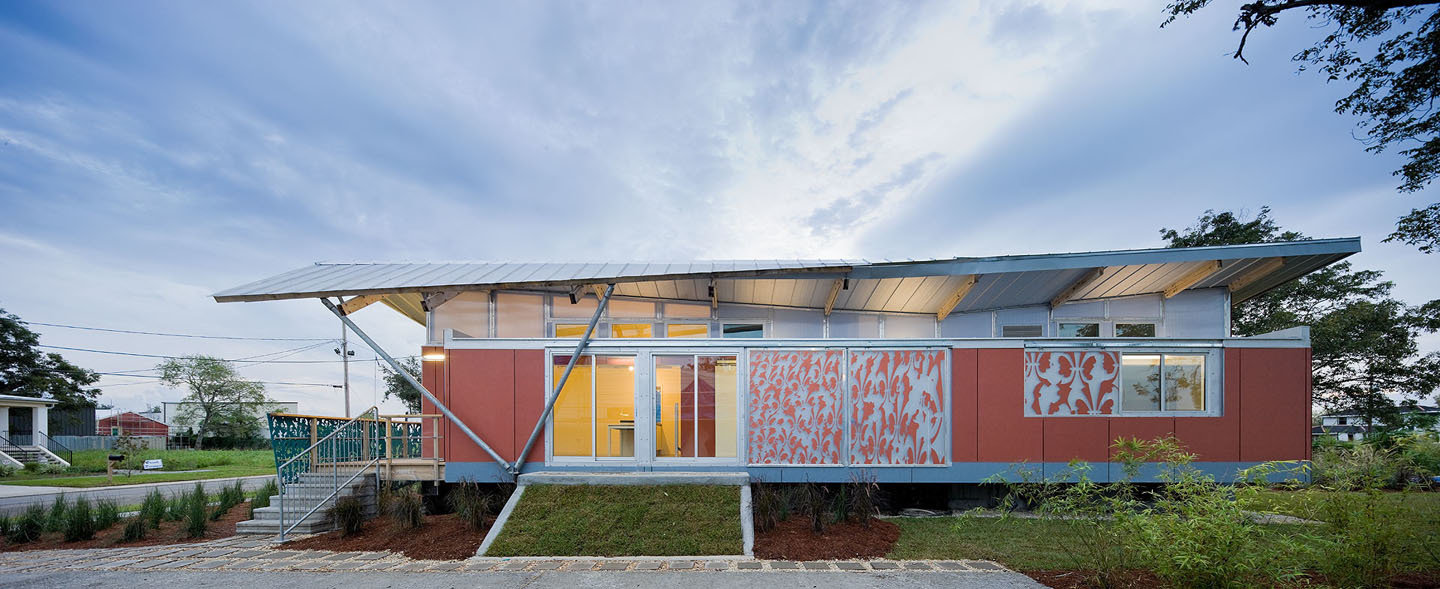
The response proposed shrinking the city back to its optimal footprint. The highest flood-risk zones would be restored to wetlands, historically significant areas preserved, and the city condensed and densified. Ninety-five percent of the city would remain on the grid; for the remaining five percent living off it, a self-sufficient, flood-resilient house was designed — one that floats in the event of a flood.
Critically, the estimated cost of buying out flooded land and returning it to wetlands was less than half the cost of upgrading existing flood control systems — making the approach not only ecologically sound, but fiscally responsible.
learn more